As the sun sets over Lake Elementaita, thousands of flamingos gather along its shores, painting the horizon in breathtaking shades of pink. The scene is one of the most arresting in East Africa. But the birds did not choose this lake by accident, and their presence here is not a story of natural abundance. It is an ecological warning.
So, why are the flamingos in Lake Elementaita, and not in Lake Nakuru, where they have historically gathered in the millions?
The flamingoes followed the algae, and the algae followed the water’s chemistry. The water’s chemistry has been changing for years, and the birds are the most visible indicator of that change.
What’s the Difference Between the Lesser Flamingo and the Greater Flamingo?
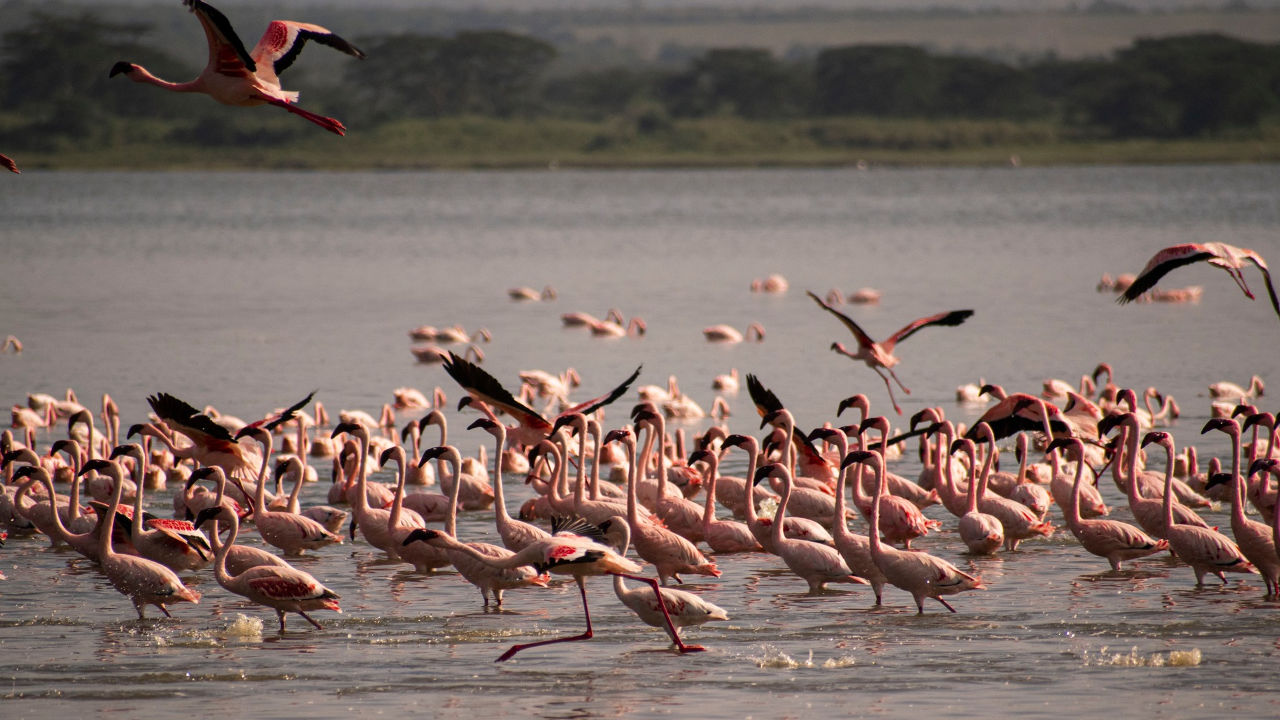
There are two species of Flamingos in Kenya. The lesser flamingo and the greater flamingo. The more common of the two birds is the latter (greater flamingo), and it’s also the most widely distributed. It’ll be found in both freshwater and brackish water regions across East and Central Africa.
The showstopper, the lesser flamingo, and also the most popular species, can be found breeding on the shallow shores of soda lakes in the Kenyan Rift Valley. Still, you’ll spot both these species flocking around Lake Nakuru and Elementaita.
The lesser flamingo (Phoeniconaias minor) is classified as Near Threatened on the IUCN (International Union for Conservation of Nature) Red List, with an estimated global population of 2.2 to 3.2 million birds, a figure that might seem large at face value, but has been declining.
These sentiments were also repeated by Dr. Oliver Nasirwa, a senior research scientist at the National Museums of Kenya, during a 2025 interview with the Nation Media Group. The researcher attributed the decline in flamingo numbers to persistent flooding, explaining that the population has been decreasing since 2014. “The flooding had also diluted the salinity, which controls the formation of algae, food for the birds, ” she added.
Similarly, the National Wildlife Census 2025 revealed a worrying decline in waterbirds, particularly flamingos. A 2010 study of Kenya’s Rift Valley lakes by Lothar Krienitz and Kennedy Kotut found that Lesser Flamingo (Phoeniconaias minor) populations fluctuate significantly in response to changes in the quantity and quality of algae, their primary food source.
In case you don’t know, the IUCN Red List is the world’s most comprehensive inventory of species’ conservation status, used by policymakers, journalists, and scientists as an authoritative reference.
The lesser flamingo feeds almost exclusively on Spirulina, the blue-green algae (cyanobacterium) that thrives in alkaline soda lakes. This explains why water chemistry changes directly translate into flamingo population shifts.
The greater flamingo, on the other hand, eats crustaceans and invertebrates, which are entirely different food sources from algae. For this reason, both of these flamingo species coexist without competition.
It’s quite simple to tell the difference between the lesser flamingo and the greater flamingo. The lesser flamingos have red and pink beaks (with black tips), while the greater flamingos have light pink beaks that also have black tips.
Interesting fact: The lesser flamingos are born completely white or grey. The iconic vivid pink shading is “eaten into existence.” The blue-green algae they feed on are rich in natural organic pigments called carotenoids, which help produce the pink color.
Lake Elementaita Designations and What They Mean
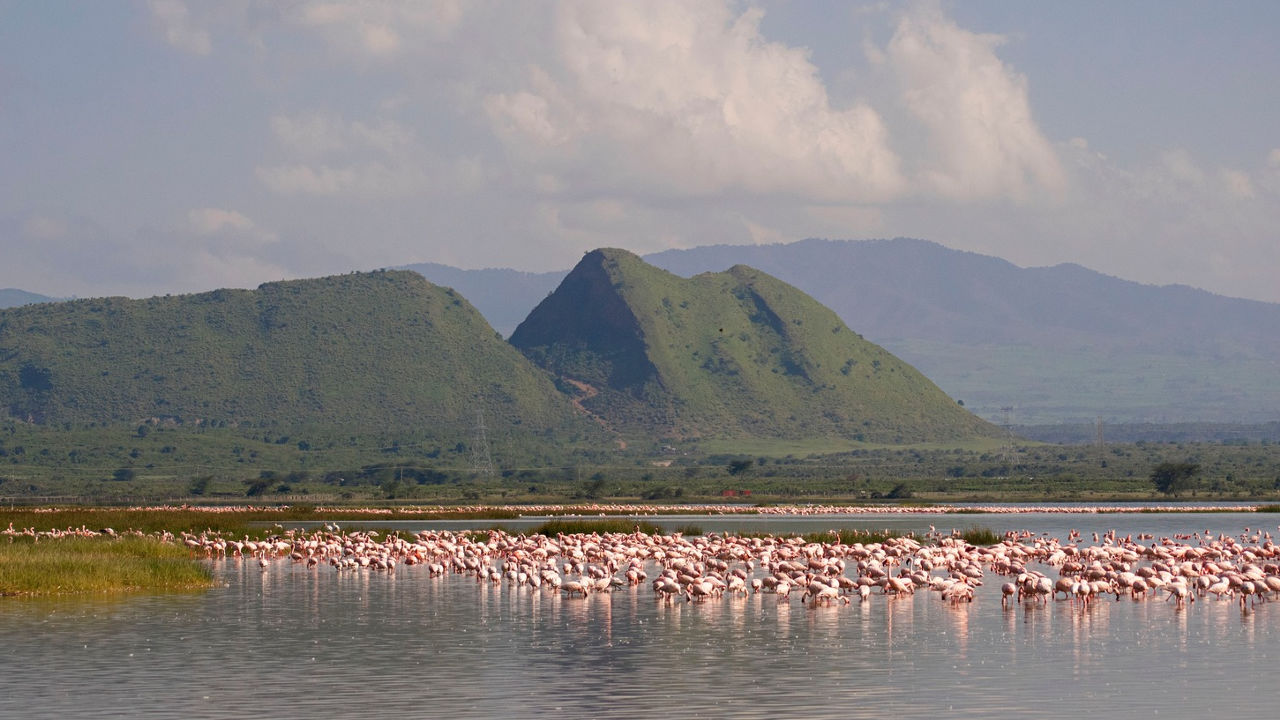
UNESCO World Heritage Site, Lake Elementaita, together with Lake Nakuru and Lake Bogoria, forms the Kenya Lake System, which was inscribed as a UNESCO World Heritage Site in 2011 for its outstanding universal value as a habitat for globally significant bird populations and geological heritage.
Here’s the truth. The UNESCO World Heritage Status is a prestigious accolade awarded to landmarks or areas recognized for having “Outstanding Universal Value.” These heritage and cultural sites are considered to have exceptional value, and their preservation is vital to all humanity and future generations. That’s how important Lake Nakuru and Lake Elementaita are to Kenya, the world, and future generations. But that’s changing with the sudden shift, as flamingos are flocking more in Lake Elementaita and less in Lake Nakuru due to changing water chemistry.
It might not seem alarming at the moment, but it should trigger heightened protection obligations under Kenyan law and international agreements.
Ramsar Sites are wetlands of international importance designated under the Ramsar Convention on Wetlands (1971). Kenya has six Ramsar sites, and while Lake Elementaita’s Ramsar status (designated in 2005) is recognized on paper (gazetted as a Kenya Wildlife Service sanctuary in 2010), active enforcement is inconsistent and lacks permanent, on-site ranger presence.
Environmental experts and UNESCO have identified this fragile Rift Valley ecosystem as a conservation priority, calling for its urgent protection. The site is managed jointly by the Kenya Wildlife Service and the Soysambu Conservancy. A recent article by the Standard Media Group also pointed to encroachment and development, fluctuations in water levels, pollution, and sedimentation from runoff near water basins. As a result, the fragile ecosystem remains highly vulnerable.
Lake Elementaita is also listed as an Important Bird Area (IBA). This designation is given to sites critical for bird conservation globally. More than 450 species of birds have been recorded at the lake, including 90% of Kenya’s black-necked grebes and Cape teals, and it is one of the few breeding grounds for the Great White Pelican.
Independently, it qualifies as a Key Biodiversity Area (KBA), a site that contributes significantly to the global persistence of biodiversity, as defined by documented thresholds for threatened species.
What Is Happening to Lake Nakuru?
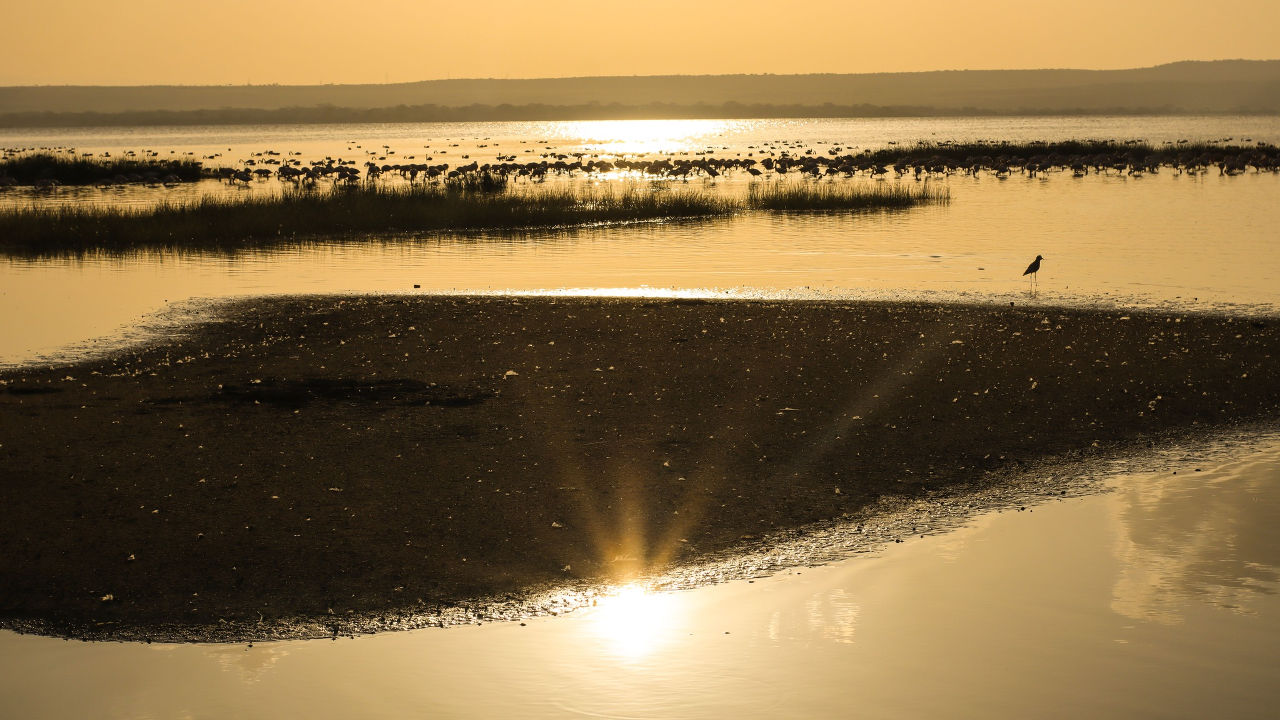
Well, a lot has been changing in Kenya’s weather, and the environment is shifting. Over the last decade, there’s been a sharp decline in the flamingo population at Lake Nakuru. The sudden shift of flamingos from Lake Nakuru to Lake Elementaita is a striking example of how poor watershed management and a changing climate are reshaping one of Kenya’s most iconic ecosystems.
So, who’s to blame? Well, it is important to note that, because Lake Bogoria, Lake Nakuru, and Lake Elementaita are protected wetlands and UNESCO World Heritage sites, they are primarily monitored by a consortium of government and environmental agencies.
KWS (Kenya Wildlife Service) manages the parks and sanctuaries, patrolling the shorelines and monitoring both water levels and the health of the wildlife that depend on the alkaline balance. This arm of the Kenyan government actively tracks flamingo populations. KWS partners with the National Museums of Kenya and Nature Kenya to conduct bi-annual waterbird censuses every January and July. Recently, they collaborated with UNESCO to study the alarming population shifts and fading colors in the Rift Valley.
KMFRI (Kenya Marine and Fisheries Research Institute) conducts extensive periodic scientific assessments on the water chemistry (pH, dissolved oxygen, and total dissolved solids) and aquatic productivity of the Rift Valley lakes. The Water Resources Authority (WRA) monitors catchment areas, manages stream inflows, and oversees hydrological data on rising water levels in these lakes.
UNESCO oversees the Kenya Lake System, working alongside KWS to manage urban development and environmental conservation around the lakes. Lastly, academic institutions such as Egerton University continuously conduct ecological research, often deploying water-quality sensor buoys to track chemical fluctuations and alkalinity trends on Lake Elementaita and Lake Nakuru.
Kenya’s updated National Biodiversity Strategy and Action Plan (NBSAP) aligns with the Kunming-Montreal Global Biodiversity Framework (KM-GBF) to help halve biodiversity loss. Regarding the Rift Valley Wetlands, the strategy prioritizes the 30X30 target by mandating that inland waters, including lakes and wetlands, be managed sustainably, integrated into spatial land-use plans, and subject to effective restoration to enhance ecological integrity.
Despite this monitoring infrastructure, the flamingo population at Lake Nakuru has continued to decline over the past decade, with no reversal in sight. Unfortunately, local conservation measures are largely insufficient on their own to reverse the trend, as the decline is fueled by massive, interconnected regional and climate-driven crises. While highly localized actions show small pockets of success, waterbird censuses continue to reveal severe ecological disruptions across the Great Rift Valley.
Increased rainfall and altered drainage patterns (linked to climate change) have raised Lake Nakuru’s water levels significantly over the past decade. Changes in weather systems, specifically a southward shift of moisture from the southern Indian Ocean, and deforestation in catchment areas have caused Lake Nakuru’s surface area to nearly double. The rapid expansion has submerged park infrastructure and altered the lake’s alkalinity by diluting the water.
Lower alkalinity directly results in less Spirulina growth. Spirulina (Arthrospira platensis) thrives in extreme environments that most other algae and bacteria cannot survive. They are also the main diet for lesser flamingos. Less Spirulina means fewer flamigos. Naturally, the birds will go where the food is, explaining the sudden shift from Lake Nakuru to Lake Elementaita. It’s important to note that this is not a one-time event. If anything, it reflects a structural change in the Rift Valley’s hydrology.
Conservation Pressures and Threats
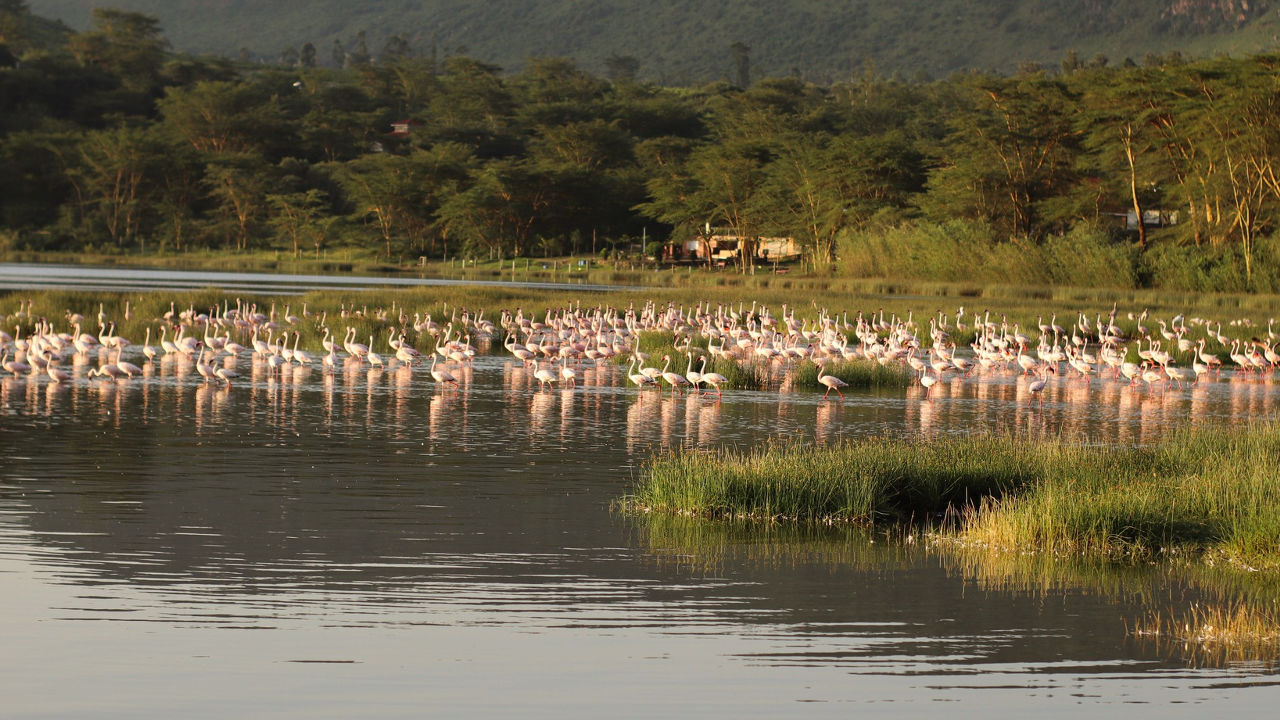
Even though Lake Elementaita is slowly becoming a new feeding ground for flamingos, it could quickly lose its prestige if its habitat is destroyed by encroachment from residential development and commercial farming.
Runoff water from farms and towns like Gilgil can also affect the water chemistry, threatening alkalinity. There have also been ecological threats from invasive species on the lake, from Alcolapia grahami fish to invasive plants like the encroaching cactus plants that have historically surrounded the Soysambu Conservancy.
While flamingos nest directly on the mudflats and rocky islets of Lake Elemenetaita, expanding cactus thickets degrade the broader ecosystem by crowding out native forage and altering animal movement. Both KWS and Soysambu Conservancy share management responsibilities, but Soysambu Conservancy is directly responsible for daily ground operations and invasive plant eradication, while the Kenya Wildlife Service (KWS) acts as the overarching national regulatory authority.
Between May and July, there’s usually an influx of birds spotted at Lake Elementaita, which has, in turn, attracted large gatherings of tourists at dusk. Unfortunately, undirected tourism can disrupt nesting birds, particularly the Great White Pelicans.
Human activity continues to place increasing pressure on Lake Elementaita’s fragile ecosystem. It’s been documented by Nature Kenya that flamingoes have been building nests at Elementaita in mid 2024, a rare breeding event that was threatened by predators and tourist disturbance.
Boats and tourists that venture too close to breeding islands can startle nesting birds, causing them to abandon their mud nests and leave eggs exposed to predators. Along the shoreline, the expansion of hotels and lodges has encroached on riparian habitats, degrading nesting areas and affecting water quality across the Kenya Lake System.
As a vital “sister lake” to Lake Nakuru, Elementaita supports large breeding colonies of Great White Pelicans and flamingos, whose natural breeding cycles are easily disrupted by human activity, particularly around the hot springs and nesting grounds.
With about 75% of the lake within the privately managed Soysambu Conservancy, conservation authorities work alongside landowners and UNESCO to regulate tourism and ensure the long-term protection of this internationally significant ecosystem.
Watch Pink Flamingos At Lake Elementaita Responsibly
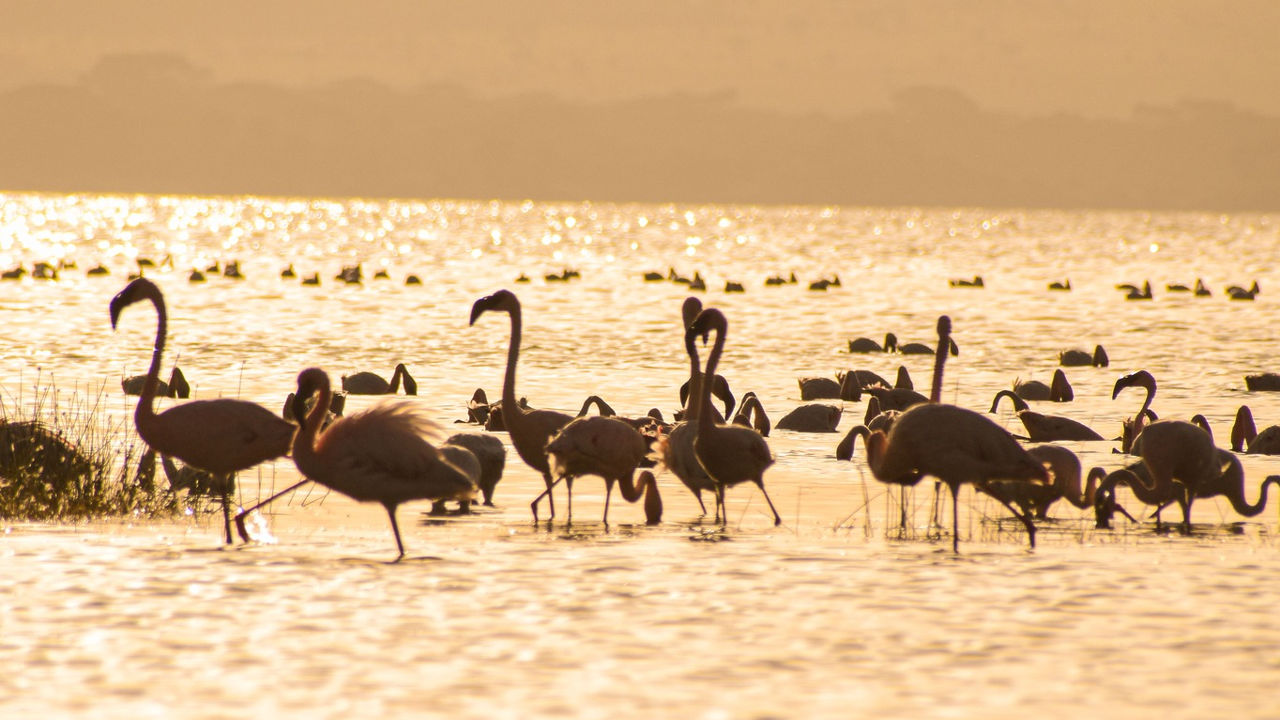
Flamingos breed on the shallow shores of soda lakes, and since Lake Nakuru has experienced a rise in water levels, its once-popular shores no longer benefit the birds. As such, you’ll get the best view of the birds in Lake Elementaita, Bogoria, Nakuru and Magadi.
There are many sightings of the birds around Lake Elementaita between May and July, and local residents love the magnificent view of the pink-breasted birds in the evening. Their vivid pink hue at sunset is magical, and it is a wonder everyone should witness at least once in their lives.
“If you want to see flamingos, this is the best time to visit Lake Elementaita. I spent my afternoon and evening today at the lake.” A Nakuru-based photographer, Brian Omwaka, documented the influx on social media.
Nature Kenya partners with organizations such as the Soysambu Conservancy and Lake Elmenteita Serena Camp to host citizen science initiatives, including waterbird censuses and bird-ringing sessions. These programs give volunteers the opportunity to help monitor thousands of migratory birds and Great White Pelicans while contributing to the conservation of this internationally important Ramsar site.
To get the most out of your visit and help conserve the area, we suggest visiting Lake Elementaita with registered eco-guides rather than going solo. While it might be exciting to get up close to the birds for a better view or to photograph them, please be careful and maintain a distance from the nesting birds.
As of 2025, you’ll spot flocks of flamingos breeding in Lake Elementaita at dusk. But the question of whether they will be there next season and the season after depends on decisions made in government offices, research institutions, and community meetings far from the water’s edge. The birds are the most visible measure of those decisions. That is the story worth watching.