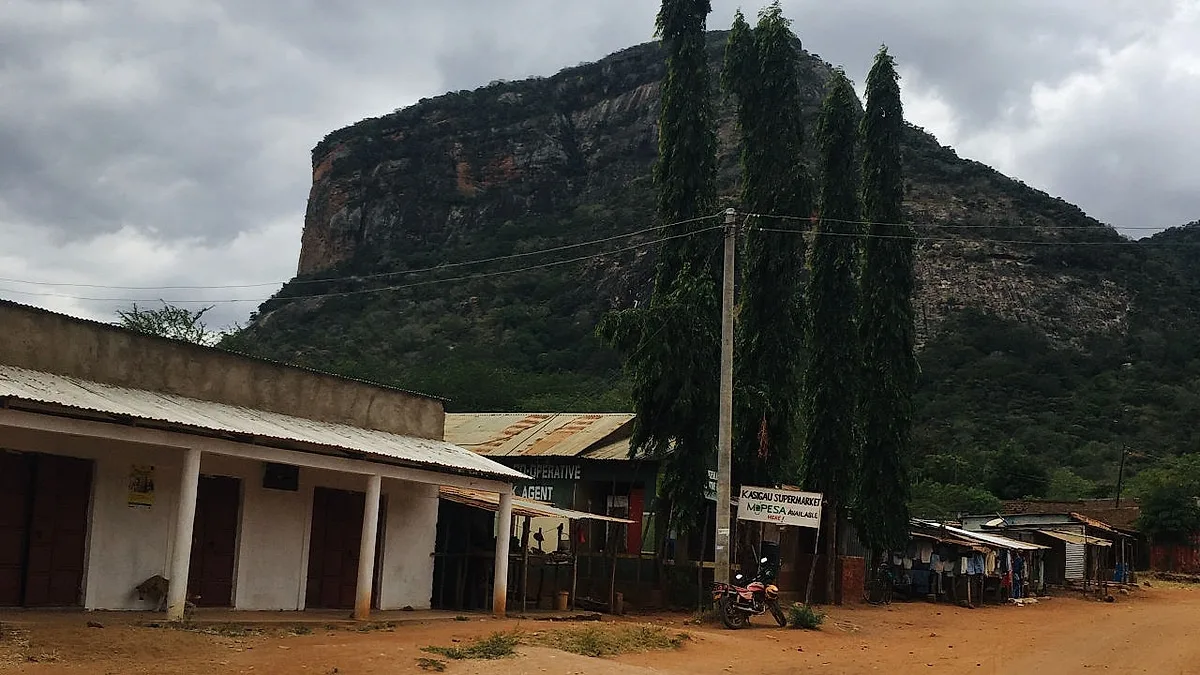
Mount Kasigau, often called the “Lone Ranger of the Plains,” is a striking monolithic mountain in Taita Taveta County. Rising dramatically to about 1,641 meters (5,384 feet) above the Taru Desert, the mountain forms part of the ancient Eastern Arc Mountains and represents the northernmost extension of this unique mountain chain in Kenya. For hikers and nature lovers, Mount Kasigau offers a challenging trek through a mystical indigenous forest that serves as an important biodiversity hotspot.
Geographical and Ecological Significance
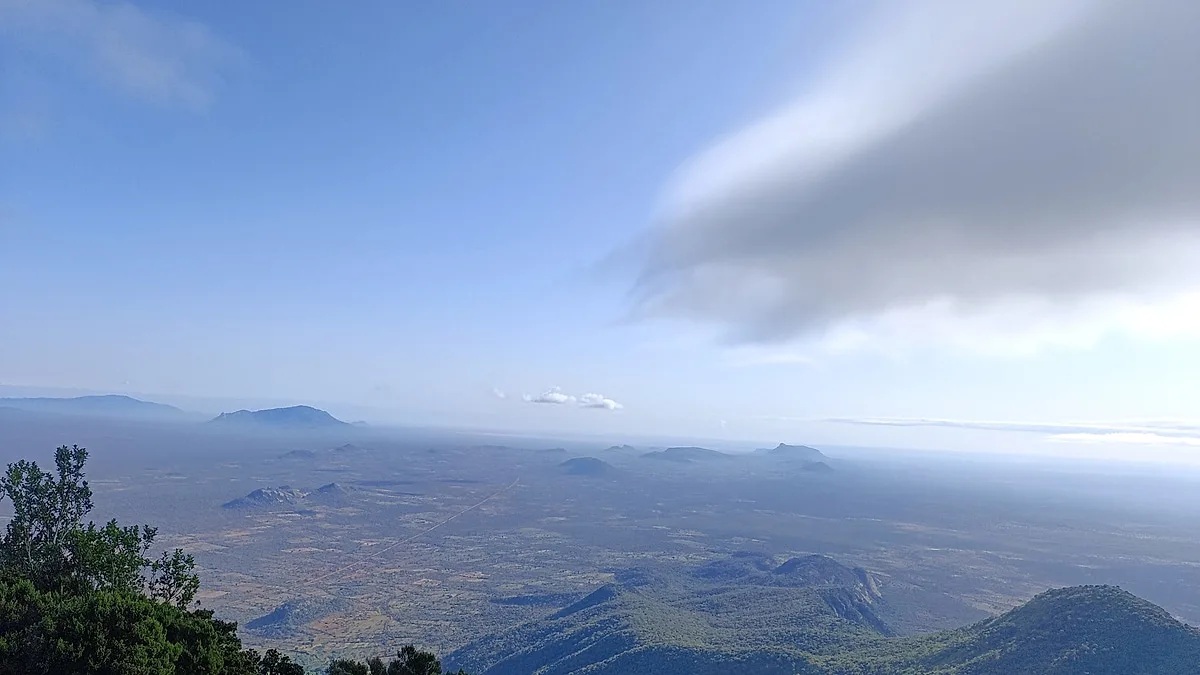
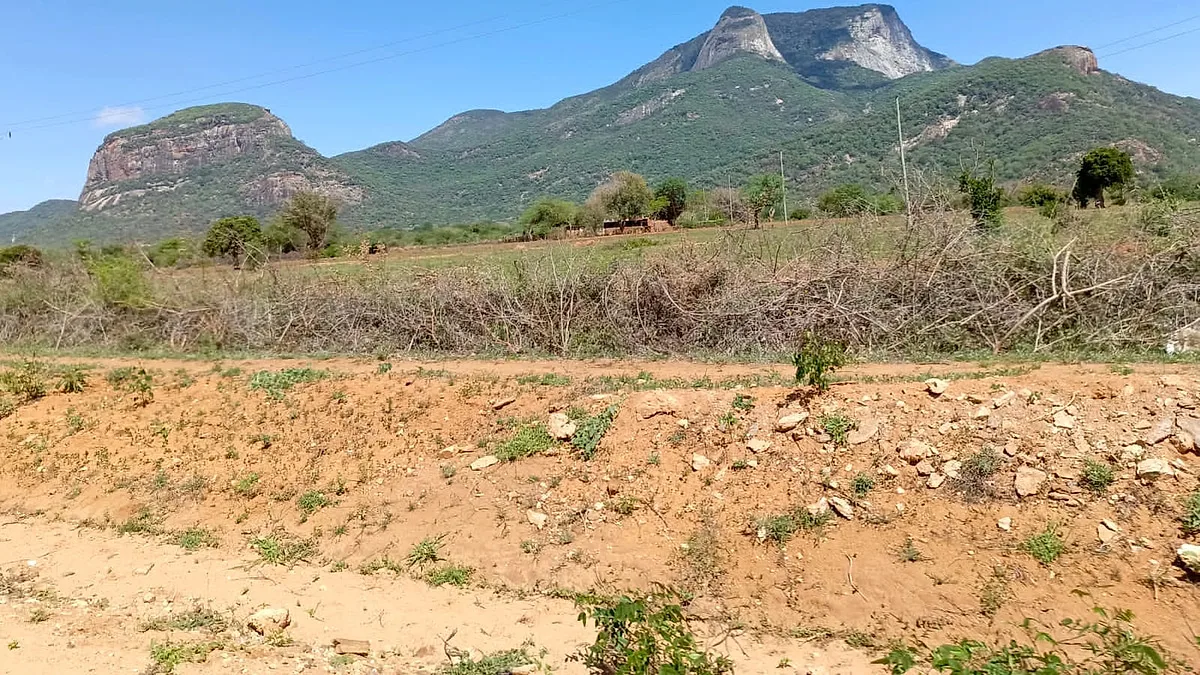 Located roughly 50 km south of Mount Sagalla and 60 km south of Voi, Mount Kasigau rises in isolation from the surrounding bushland plains. The mountain lies between Tsavo West National Park and Tsavo East National Park, making it an important elephant dispersal corridor.
The mountain is best known for its undisturbed closed-canopy forest, which begins at around 1,400 meters above sea level. This ancient forest ecosystem supports a remarkable variety of rare and endemic plant and animal species, including the Taita White-eye, endemic orchids, and impatiens flowers. Although the black colobus monkey has disappeared from the area due to hunting, red colobus monkey populations still survive alongside greater galagos and rock hyraxes.
My Experience Visiting Mt. Kasigau For the First Time
 Before we set out for Kasigau, a local warned us that we might not get transport back to our hotel in Voi, Jora Village, in Rukanga. Kasigau is a remote village with little commercial activity; transport is difficult due to poor road conditions. Also, Jora doesn’t get many visitors. Therefore, not many people travel back to Voi town past 2 pm.
Well, it was a little nerve-wracking when the first leg of the journey stopped at Maungu Village, Taita Taveta. Voi transport rarely goes directly to Kasigau. At Maungu center, you’ll need to change vans. Don’t worry, the van you book from Voi town organizes the transfers.
Therefore, we changed vans to a 7-seater Matatu. It’s approximately 40 km from Voi Town to Maungu Village Center. Our destination: Mt. Kasigau.
Drive to Rukanga Center, Kasigau
We had a contact person in Jora village who’d been waiting for us since 9 a.m. It was already noon, and the driver didn’t seem in a hurry to get to Rukanga center in Kaisigau. When we finally got moving (30 minutes later), I was contemplating going back. The road ahead was a dusty all-weather terrain; it felt like it hadn’t rained in a decade, and I had a feeling the rest of the journey would feel like camping in a boiler room. It was hot, dry, and dusty. The road had cracks. The earth beneath was clearly desperate for a drop of water.
Finally, we set out on the 40km dirt road to Rukanga, and by the time we reached Buguta, there was a clear distinction between the locals and the visitors in the vehicle. The ladies covered themselves with ‘shukas’ to protect their hair and clothes from the dust, and we looked like we’d been working in a mine.
At first, the landscape towards Rukanga was raw, with dust and heat blaring under the noon sun. Although it looked like we were driving in the middle of a park, the vegetation was filled with drought-resistant bushes and thickets that consisted mainly of Acacia Commiphora, Acacia Elatior, sparsely distributed Kigelia Africana, and Mimusops Fruiticosa shrubs, among others.
And then came the hills. This got my attention. Apart from water bodies, I have a fascination for rocky hills. Describing Taita Hills as beautiful is an understatement. The drive through Taita Hill brought back memories from Karen Blixen’s novel Out of Africa. But I am biased in saying that Taita Taveta is perhaps one of the few places I’ve visited that remains untouched. And that’s what I thought until we got to Rukanga.
Travel tip: Carry a light headgear, shuka, or bandana to cover your face and hair; the journey is dusty, and you might get to Kasigau looking like you’ve come out of a mine.
Behold! Mt. Kasigau
 Rukanga is a small village center in Kasigau, with a mountain-canvas backdrop. It looks unreal in its simplicity, like an old painting, with locals up and about in their business. The vegetables on the grocery stand look pale. They were probably acquired from Voi town. There’s not enough rain here to grow greens. There’s a tailor in the distance peddling his Singer sewing machine, too deep in conversation, and a young lady outside her shop, deep in thought, passing the afternoon away.
The moment we step out of the Matatu, the faces around us brighten. The locals of Rukanga are so welcoming. Everyone knows everyone here, and soon enough, we are whisked away in mopeds heading to Jora. At this point, our phones are out recording the marvelousness of Mt. Kasigau.
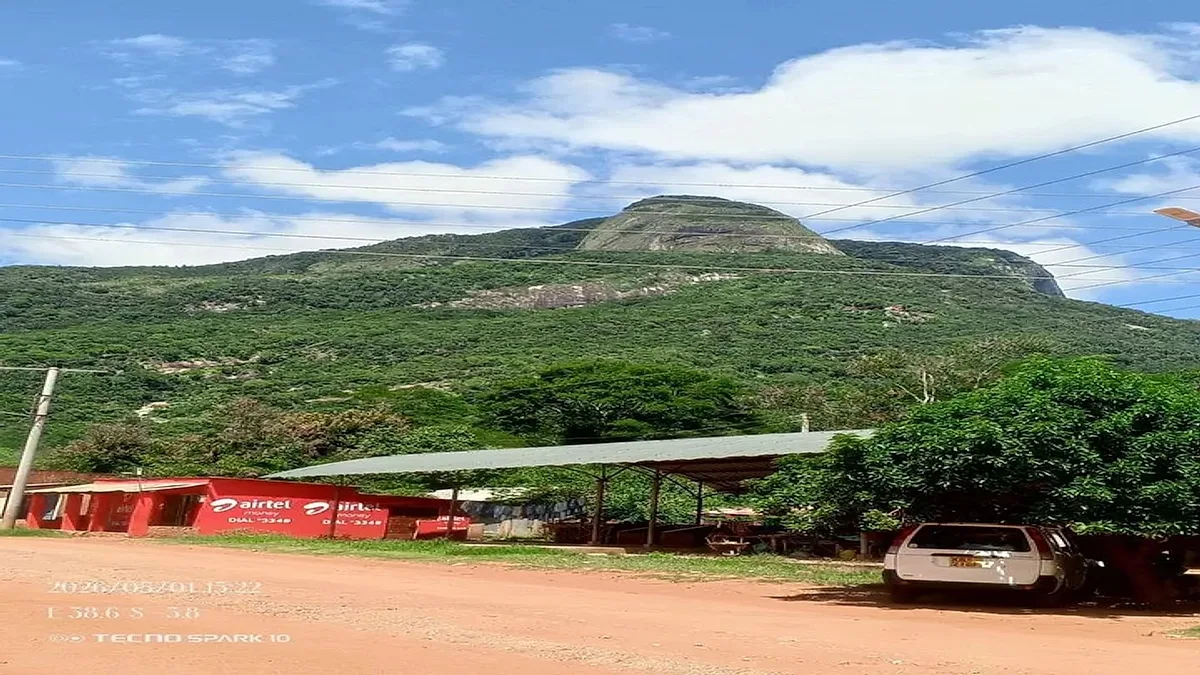
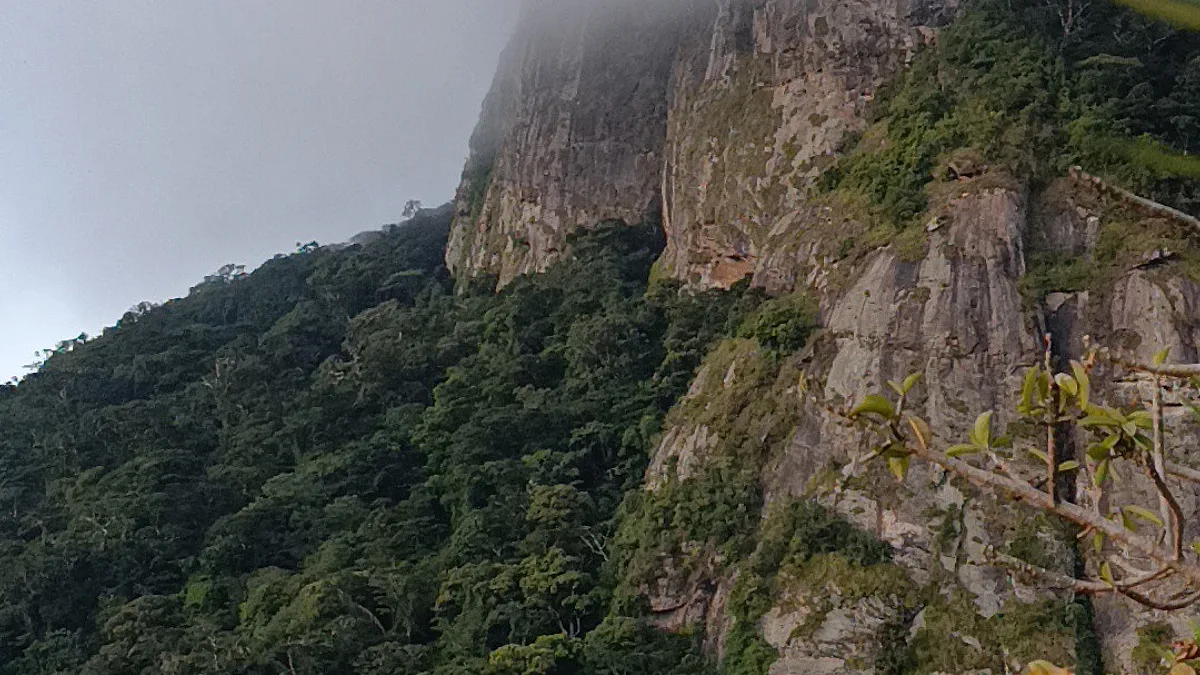
The monolithic mountain sits behind the tiny village, massive and almost like an eye in the sky. It didn’t matter which direction you went. It stood there in its greatness, almost as if it were watching, untouched and raw, with patches of forest between the vast rock beds. It was at this point that I fell in love with Kasigau.
We finally got to Jora, another tiny sleepy village at the foot of Mt. Kasigau, and on the way there, we spotted some cottages. They looked rundown and far in between. There was someone who, like me, saw Kasigau’s potential as a destination.
We found Rose waiting at the side of the road, with her baby saddled at her back. Believe it or not, she’d been waiting for us since 9 a.m. We began the 15-minute hike to her home in between elephant trails and shambas. She welcomed us with a cup of the sweetest, spiciest tea, Taita tea.
Checking Out Jora Center
We had come to Jora for my friend’s possible business venture. As they went into detail about their affairs, I could interject by asking about Mt. Kasigau and its history, and why such a beautiful place looks deserted. I was hoping to hear that this village, like every other destination in the country, is suffering the after-effects of the global pandemic, but I was wrong. Kasigau’s problems began 15 years ago.
I feel the country and the Tourism stakeholders are selling false truths. When you think of tourism in Kenya, it’s often about big budgets, 4X4 trucks, 5-course meals deep in the Savanna, and cocktails on Kilifi beach resorts only tourists can afford.
UNDP launched a Banda/Cottage project in Kasigau to help communities protect the Kasigau forest by enabling them to engage in commercial tourism. This project was a success, but no follow-ups were made, none of the websites initiated are still running, and those left in charge don’t know how to renew the annual hosting fee. Today, those Bandas/Cottages have been converted into homes, and the locals aren’t too keen to talk about them.
The Weavers of Rukanga, Kasigau
Rukanga also has a thriving weavers’ community, a project much like the Bandas that’s slowly facing the same fate. Despite the challenges and missed opportunities faced by Kasigau locals, the government and NGOs are doing a lot for the mountainside village.
The Kasigau Wildlife Sanctuary protects more than 200,000 hectares of dryland forests, 11,000 endangered elephants, countless lions, cheetahs, leopards, wild dogs, and zebras. The REDD+ project initiated in Kasigau is also the first project in the world to receive a verified emissions reduction under VCS standards.
I believe Kasigau has so much richness to offer. I spent my entire afternoon there, and I felt I needed more than a week to fully appreciate its natural bounty. There’s much to experience in Mt. Kasigau, including a mystical indigenous forest, Taita skull caves, endemic orchids, and impatiens flowers. There’s also a WW1 monument for British and German soldiers who died on the mountain.
The Hiking Experience: What to Expect
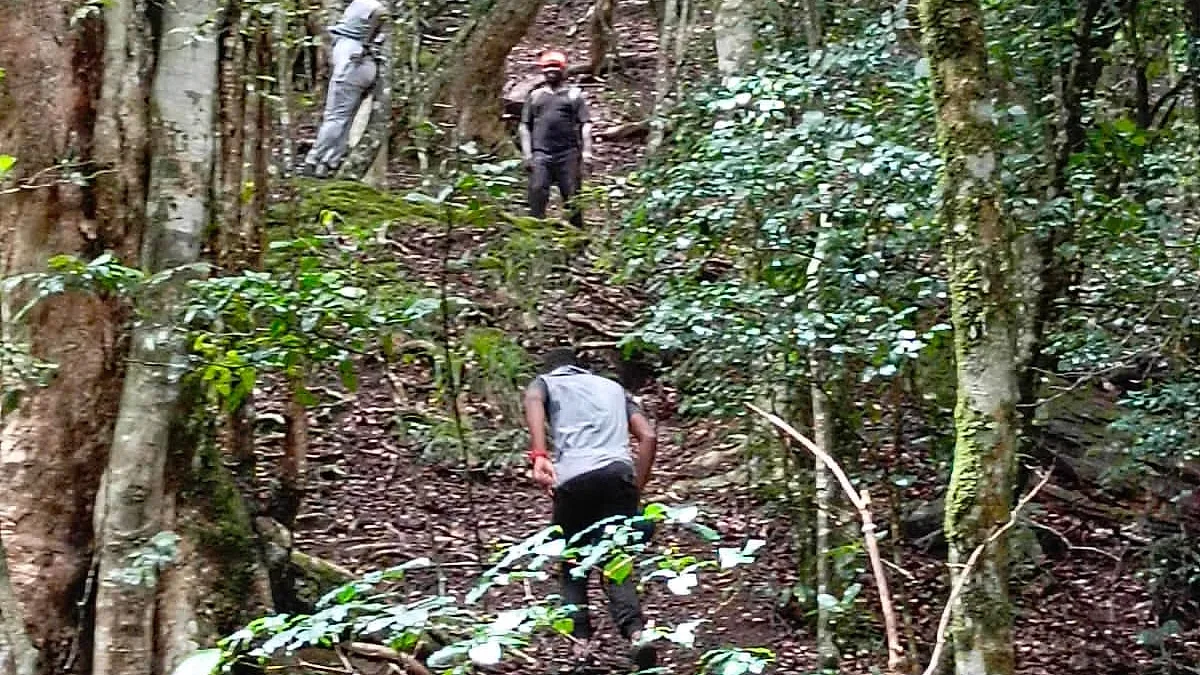 A hike up Mount Kasigau is considered a challenging adventure best suited for hikers with a good level of physical fitness.
Distance and Duration:
The round-trip hike covers approximately 16.5 km and usually takes between 6 and 7 hours to complete, depending on pace and weather conditions.
Elevation Gain:
Hikers climb nearly 1,096 meters in elevation, beginning from the hot and dry savannah plains surrounding the mountain.
The Peaks:
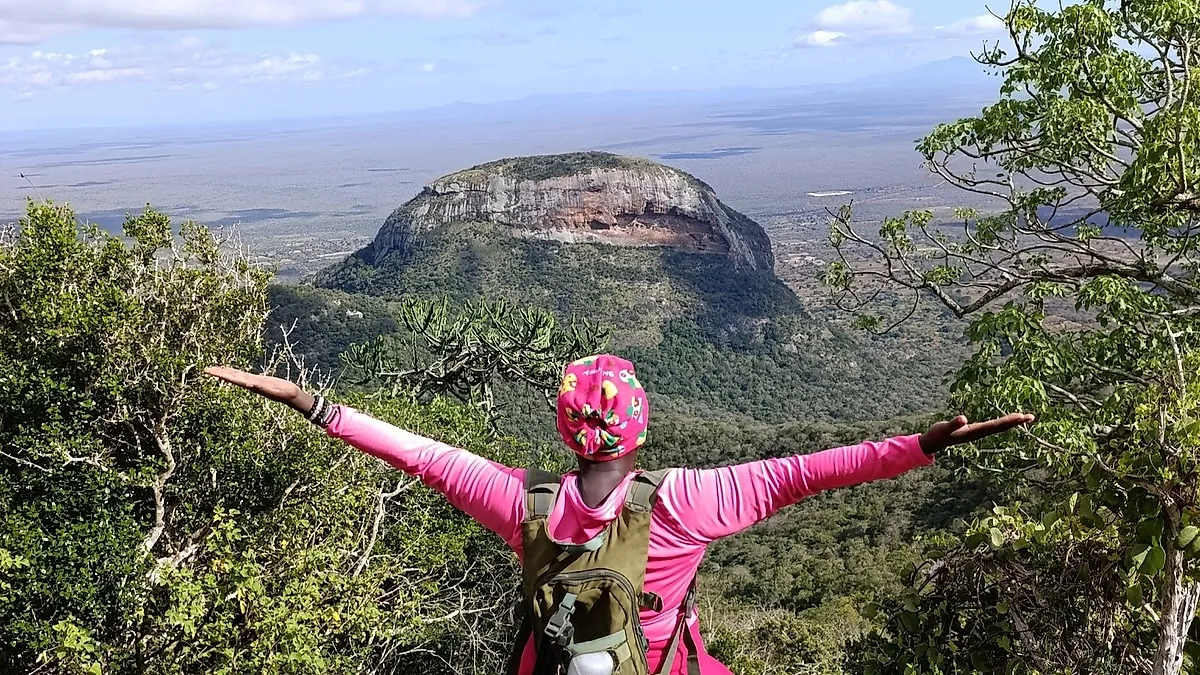
Mount Kasigau features two main peaks — the Low Peak, popular for its panoramic views, and the High Peak, the summit. Another notable viewpoint is Ngolia Peak, accessible via routes that pass landmarks such as Kwa Ezekiel.
Trail Conditions:
The hike starts in open savannah terrain before gradually transitioning into a cool, dense montane forest. Some sections are steep and slippery, especially after rain, making sturdy hiking boots highly recommended.
Historical Significance: A World War I Battleground
 Beyond its natural beauty, Mount Kasigau also holds historical importance. During World War I, British and German troops fought battles on the mountain. Today, hikers can visit memorial sites and a commemorative stone near Jora Village honoring soldiers who lost their lives there.
Logistics: Getting to Mount Kasigau
Reaching this remote destination requires some planning, as the roads are rugged, dusty, and weather-affected.
From Voi:
The mountain is located about 1 to 1.5 hours from Voi by road. Public matatus operate between Voi and Rukanga, the main village at the foot of the mountain.
From Maungu:
An alternative access route passes through Maungu, although sections of the road between Voi and Maungu are often in poor condition.
Transport Tip:
Public transport back to Voi becomes limited after 2:00 PM, so visitors are advised to either arrive early or arrange private transport in advance.
Accommodation and Camping Options
 Mount Kasigau offers several eco-friendly, community-based accommodation options that support local conservation initiatives.
Kiteghe Bandas:
Set on the hillside, these spacious rondavels provide stunning views of the surrounding plains. The bandas are self-catering and come equipped with kitchenettes, running water, and solar phone charging. Rates are approximately Ksh 800 for Kenyan residents and Ksh 1,200 for non-residents.
Kivuko Eco Camp:
Located within the Taita Wildlife Conservancy, this eco-camp is commonly used for multi-day expeditions that combine hiking with game drives.
Mount Kasigau Base Camp:
Popular among climbers and researchers, the base camp offers a peaceful atmosphere ideal for relaxation before or after the trek.
Camping:
Visitors can camp either at the foot of the mountain or higher up along the trail. Camping on the mountain costs about Ksh 2,000, payable to the Kenya Forest Service.
Essential Packing List
To enjoy a safe and comfortable trek, hikers are advised to carry:
- At least 3 liters of water due to the intense heat at lower elevations
- Comfortable hiking boots or running shoes
- Lightweight clothing, such as polyester gym pants instead of jeans
- Sunscreen, insect repellent, a hat or cap, and a light rain jacket or poncho
- A head torch, especially for overnight stays or early morning hikes
- Binoculars, a camera, and high-energy snacks or a packed lunch
Responsible Tourism and Conservation
Visiting Mount Kasigau directly supports conservation efforts and local livelihoods. The nearby Kasigau Wildlife Sanctuary protects more than 200,000 hectares of dryland forest and endangered wildlife habitats.
The region is also home to a pioneering REDD+ conservation project, recognized as the first in the world to achieve verified emissions reductions under VCS standards. By staying in community-owned bandas and hiring local guides, visitors contribute to sustainable income sources that help reduce deforestation and poaching.
The nearby village of Rukanga is also known for its vibrant weaving community, where travelers can buy locally handmade crafts and souvenirs.
Guides and Tour Options
For travelers planning a visit, several local guides and tour operators offer hiking assistance and organized expeditions.
Local Guides:
- Jackson: +254 113 058 153
- Maasai Kamando: +254 718 567 979
Organized Tours:
Companies such as Hikemaniak and Gemsbok Safaris offer guided multi-day packages that may include transport, accommodation, hiking, and wildlife experiences.
Mount Kasigau is a destination that rewards adventurous travelers with raw natural beauty, rich history, and a rare sense of tranquility. Whether you visit to conquer its peaks, explore its World War I history, or simply experience the calm atmosphere and famous Taita tea, the mountain remains one of Kenya’s most remarkable hidden gems.
Sunset Trip Back and Final Thoughts
We drove back to Voi in a last-minute hired car at sunset, and I had this undying need to share my Kasigau story. I’m definitely coming back to this land of hidden treasures. I am sure there’s so much I don’t know about Kasigau that I need to experience.
About The Author
Mercy Atieno is a Kenyan travel and lifestyle writer passionate about storytelling, culture, and exploration. With over five years of experience in travel writing, she creates engaging content that highlights destinations, entertainment spots, and unique travel experiences across Africa. Mercy studied Journalism at the Kenya School of Mass Communication, where she earned a diploma that strengthened her research and storytelling skills.
She contributes travel and lifestyle content to Reach The Dodo, focusing on guides for cities such as Johannesburg, Cape Town, and Nairobi. Her writing blends practical travel advice with vivid narratives inspired by nature, culture, and local traditions. Mercy dreams of traveling the world full-time while embracing an off-grid lifestyle and sharing authentic experiences that inspire readers to explore and appreciate diverse cultures.
Mercy can be contacted through her X account.